
- Home
- Crypto Blog
- Token-Based vs Cash KOL Compensation: Pros and Con...
Token-Based vs Cash KOL Compensation: Pros and Cons
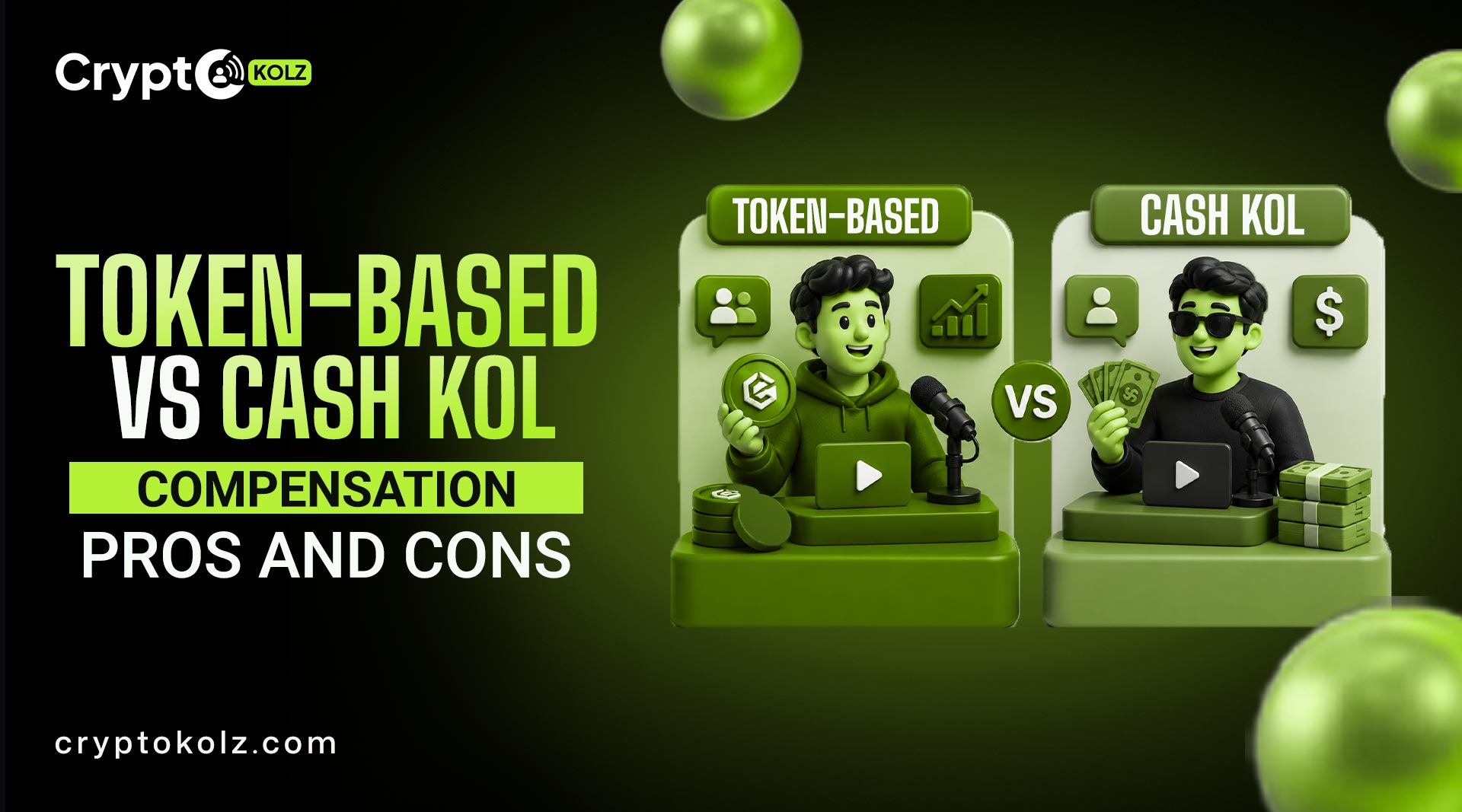
A smart KOL token payment model lets creators share upside with the project they promote, while a traditional cash fee offers predictability.
Choosing the right mix in 2026 affects budget control, community trust, and even regulatory exposure. This guide weighs each approach so you can sign crypto influencer compensation packages that favour growth, not guesswork.
Why Compensation Strategy Matters in Web3
Web3 launches often hinge on “earned trust.” If followers sense the deal skews too cosy or too cash-grabby, your conversion rate will nosedive. Meanwhile, regulators worldwide now watch undisclosed token deals. A transparent, fair structure:
Aligns KOL incentives with long-term value.
Signals integrity to cautious newcomers.
Simplifies accounting and tax reporting.
In short, your web3 influencer payment blueprint is as brand-critical as the whitepaper.
What Is Token-Based Compensation?
In a token deal KOL arrangement, the creator receives your native token, usually with a cliff or vesting schedule. Variants include:
Straight token drop: Tokens delivered upfront, no lock-up.
Vested stake: Coins unlock over six to twelve months.
Performance-tiered vesting: More tokens unlock once KPIs say, 5,000 verified wallet connections are hit.
Key Mechanics
Pricing reference: Value pegged to a launch round or 24-hour VWAP (volume-weighted average price).
Vesting smart contract: Automatically locks and releases tokens.
On-chain KPI oracle: Confirms when performance milestones trigger extra vesting.
Cash Compensation Explained
Cash deals pay KOLs in stablecoins (USDC, USDT) or fiat. Typical structures:
Flat fee per campaign: One-off payment for an agreed deliverable set.
Retainer: Monthly payout for ongoing promotion.
CPI/CAC model: Cost Per Install or Cost Per Verified Wallet, mirroring paid-ad frameworks.
Cash is clean for accounting but may dilute the KOL’s emotional stake.
Token vs Cash: Side-by-Side Comparison
Factor | Token-Based | Cash-Based |
Alignment | High: upside tied to project success | Medium: fixed reward regardless of outcome |
Immediate liquidity | Low (vesting, price volatility) | High (stablecoins convert instantly) |
Perceived bias | Can raise “pump” concerns if undisclosed | Lower if #ad clearly tagged |
Accounting simplicity | Complex (fair-value measurement each tax period) | Simple (fixed invoice value) |
Treasury impact | Saves cash; uses native assets | Uses cash; preserves token supply |
Regulatory risk | Greater if marketed as investment | Lower but still needs disclosure |
Deep-Dive Pros and Cons
1. Token-Based Pros
Skin in the game: KOL becomes a quasi-founder, promoting beyond contract.
Cash-flow friendly: Early-stage projects keep fiat reserves for dev work.
Community optics: Holders like seeing partners vested too.
2. Token-Based Cons
Volatile valuation: A 40 % price swing can sour relations fast.
Dump risk: KOL might sell at TGE (Token Generation Event) if no lock-up.
Tax headaches: Creators may owe tax on tokens before they can liquidate.
3. Cash Pros
Straightforward budgeting: CFOs love predictable line items.
Lower legal complexity: Fewer securities-law questions.
Quick settlement: No worries about launching vesting contracts.
4. Cash Cons
Limited upside: KOL may prioritise whoever pays most, not who builds best.
Higher upfront cost: Large cash outlay before ROI proves out.
Less community alignment: Audience may view deals as mere ad spend.
Hybrid & Performance Options
Many teams blend the two:
50/50 Split: Half stablecoin, half vested tokens.
Performance-Based KOL: model Smaller cash retainer plus token bonuses when verified-wallet KPIs hit.
KOL Contracts: with claw-back clauses If KOL dumps early, a portion auto-returns to treasury.
These hybrids smooth volatility while keeping skin in the game.
Decision Framework for 2026
Stage of project: Pre-seed ventures usually prioritise cash preservation, favouring token deals. Post-launch products with revenue might write cheques.
Market conditions: In bull runs, token upside attracts top KOLs. In bear markets, cash is king.
Jurisdiction: U.S. securities scrutiny? Lean cash. Emerging-market focus? Tokens resonate better.
KPI clarity: If you can’t measure on-chain goals cleanly, avoid complex performance-token structures.
8. Compliance & Disclosure Checklist
Always tag posts #ad or #sponsored.
Detail vesting terms publicly whitepaper appendix works.
Use smart-contract vesting proof links for transparency.
Document fair-market token value for each vesting tranche.
For cash, issue invoices that match deliverables and wallet addresses.
Failure to follow these steps risks FTC fines or securities action
Case Study Snapshot
A 2025 gaming NFT platform hired a mid-tier streamer under a 50/50 split: US $10,000 in USDC and 200,000 vested tokens (12-month drip). KPIs hinged on 8,000 marketplace sign-ups.
Outcome: 9,300 sign-ups, CAC = US $2.15 (versus paid ads at US $3.60).
Creator retention: Streamer held 87 % of tokens twelve months later, signalling belief in the project.
Community response: AMA replay logged 120,000 views, 2,400 comments praising transparency.
Result: token-cash hybrid outperformed pure-cash influencers in both cost and sentiment.
Internal Linking Opportunities
To deepen topical authority, embed contextual links:
Anchor Performance-Based KOL to a guide on structuring milestone-driven creator deals.
Anchor KOL Contracts to your legal primer on influencer agreements.
These links feed Google’s semantic graph and keep users exploring relevant resources.
Key Takeaways
Align incentives: Tokens foster long-term advocacy; cash ensures immediacy.
Mitigate volatility: Vesting, caps, and hybrids balance risk.
Track KPIs on-chain: Wallet-connect or swap volume beats vanity likes.
Disclose everything: Transparent terms build trust and dodge fines.
Final Thoughts
No one-size-fits-all answer exists. Early-stage, cash-strapped teams often lean on token grants with smart vesting. Mature projects favour cash to avoid dilution. Most settle somewhere between. The winning formula adapts to market cycles, legal climate, and your own treasury runway.
Pick the structure that secures commitment, protects community confidence, and scales with your ambitions. Get those three right, and your next KOL partnership will pay dividends whether those dividends arrive as tokens, cash, or, ideally, sustainable growth.
 Latest Blog
What is a Crypto KOL? The Role of Influencers in Blockchain Marketing
Latest Blog
What is a Crypto KOL? The Role of Influencers in Blockchain Marketing
The cryptocurrency world is growing fast. New projects launch every week, and thousands of tokens compete for attention. But not every project becomes popular or trusted. Success often depends on who is talking about it. This is where a crypto KOL (Key Opinion Leader) plays a big role.A crypto KOL is a person who influences how people think about blockchain and cryptocurrency projects. They help spread awareness, build trust, and guide investors toward new opportunities. In this article, you will learn what a crypto KOL is, why they matter, and how they help crypto projects succeed.What is a Crypto KOL?A...
 Latest Blog
Verified Crypto Influencers: How to Choose the Right Ones
Latest Blog
Verified Crypto Influencers: How to Choose the Right Ones
Finding verified crypto influencers is now one of the most important parts of any Web3 marketing plan. The crypto world moves fast, new projects launch every day, and users trust only a few voices they consider honest and reliable. If you want steady, long-term growth, you need influencers who are respected, transparent, and truly understand the industry.This guide will help you do exactly that. You’ll learn how to find trustworthy influencers, how to check if they are genuine, and how to choose the ones who match your project’s goals. The goal is simple: to help you make smart and safe...
 Latest Blog
Best Crypto Influencer Platforms for Web3 in 2026
Latest Blog
Best Crypto Influencer Platforms for Web3 in 2026
The crypto world changes fast new tools, fresh projects, and new ideas appear all the time. As the space continues to grow rapidly, the need for strong and simple crypto influencer marketing is bigger than ever. If you want to launch a token, promote an NFT drop, or grow a Web3 community, the right platforms can help you reach the right people in a clear, effective, and efficient way. Influencer marketing is no longer optional; it has become an essential part of any successful crypto campaign.This guide walks you through the best platforms for crypto influencer marketing. You’ll learn how...
 Latest Blog
Top Crypto Influencer Marketing Mistakes You Must Avoid
Latest Blog
Top Crypto Influencer Marketing Mistakes You Must Avoid
Crypto marketing is growing fast, and influencers have become a key part of promoting projects, tokens, and Web3 campaigns. Influencers can help you reach thousands of potential investors and users. But even with the best influencers, mistakes can hurt your project. They can waste money, reduce credibility, or fail to attract the right audience.In this guide, we will explain the most common crypto influencer marketing mistakes and show how to avoid them. By following these tips, your campaigns will be more effective, trustworthy, and successful.What Is Crypto Influencer Marketing in Blockchain?Crypto influencer marketing is when a cryptocurrency or blockchain project...
 Latest Blog
Crypto Guest Posting Tips to Boost Trust & SEO
Latest Blog
Crypto Guest Posting Tips to Boost Trust & SEO
Guest posting for crypto projects has become one of the most powerful tools for crypto projects that want to build trust, gain online visibility, and attract real investors. With thousands of new blockchain projects, token sales, and crypto startups launching every year, standing out has become harder than ever. This is why guest posting is now considered an essential strategy for improving SEO, increasing credibility, and driving long-term organic traffic.Explore, you will learn why guest posting matters for crypto projects, how it boosts trust, how it improves SEO, and how you can use it to grow your project faster than...
From account setup to troubleshooting, our FAQ section provides clear, concise solutions to help you navigate with ease. Save time and find the information you need instantly. Check out the FAQs now!